Data Scientist · Munich

Satadru
Bag

Finding the one in ten million.

Real-time pipelines and deep-learning models for images and time series, built for a survey designed to stream ten million events a night. For more than twelve years the data came from the sky. Now I point the same methods at the Earth.

  • EU Blue Card holder (Germany)
  • Available at short notice
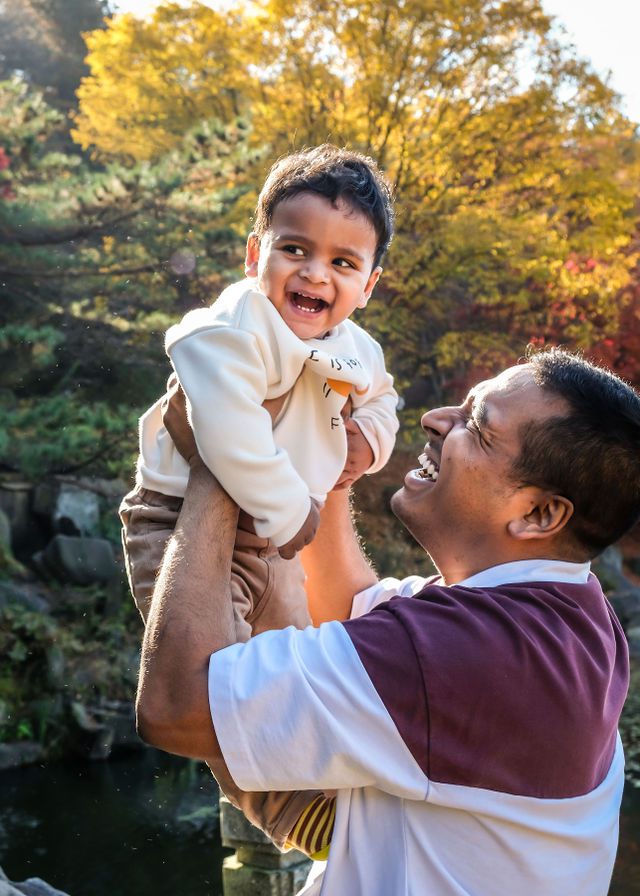
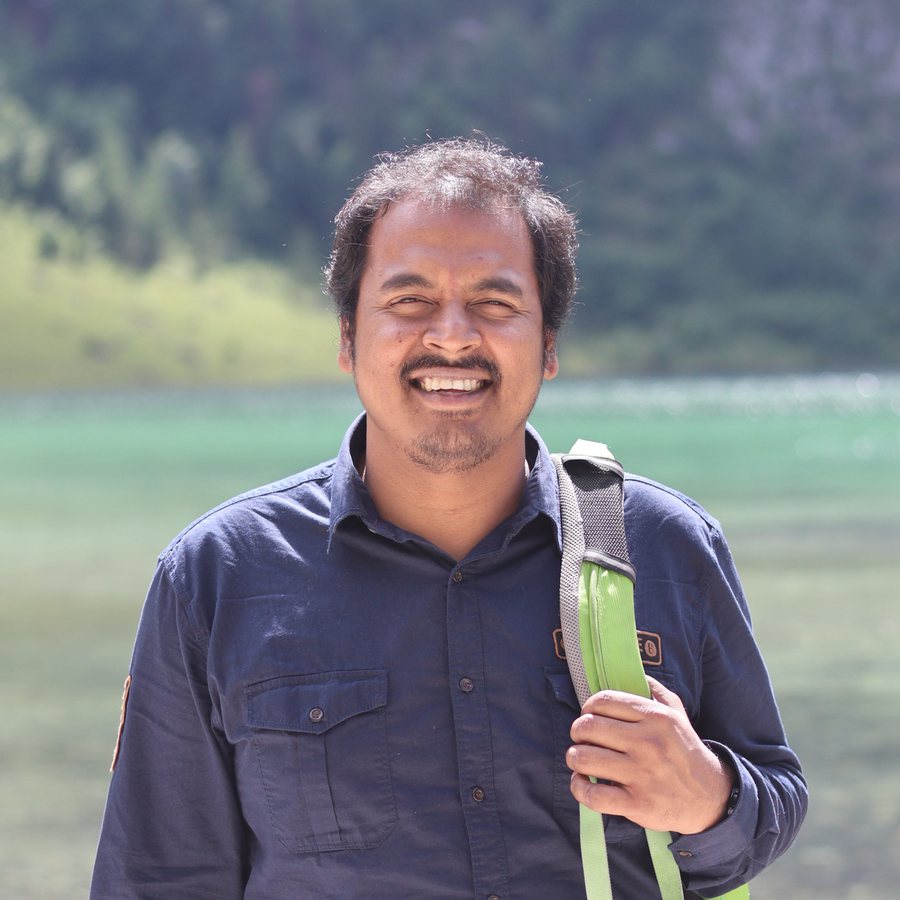
Portrait of Satadru Bag

01 · Story

From the cosmos to the planet

I build machine-learning systems that find rare events in large streams of images and time series.

I have a PhD in astrophysics and 12+ years of analysing large, noisy data in which the events of interest are rare; 7+ of those years with hands-on machine learning.

Right now that means a real-time pipeline on Google Cloud built for ~10 million events (~1 TB) a night, and deep-learning models (transformers, ConvLSTMs, CNN ensembles) that pick out the handful that matter: about 70% of rare events caught while wrongly flagging only 1 in 10,000 ordinary ones.

I came to data from theory: theoretical physics and higher mathematics first, then code, statistics and data analysis. Several of my projects began where no standard method existed. Since 1996, the delay between a random signal and its overlapping copy had been thought impossible to find without a model of the signal. I showed that every wrong way to split the sum comes out rougher, turned that into a new statistic and proved why it works. With no template and no training data it finds hidden time-delayed copies at 92% precision under survey-grade noise (53% for the standard autocorrelation), confirmed on real data.

The data has been astronomical, but the problems are the ones industry has: irregular multi-band image sequences, sensor fusion, extreme class imbalance, predictions that must update with every new observation, and pipelines that must run unattended. They map directly onto Earth observation, forecasting, anomaly detection and computer vision.

I lead one of the rare-event searches in a 10,000-member international collaboration (working-group lead since 2025), aimed at some of its rarest and most demanding targets; my pipeline and models serve it. Alongside: generative models (diffusion, normalizing flows), simulation-based inference and LLM agents (EO-Agent).

Much of my time now goes into agentic AI for research: agents propose, run and log hundreds of experiments, while every claim has to pass quality checks I set in advance (pre-registered comparisons, repeated seeds, locked holdout data, explainability tests that catch false positives and shortcuts).

  • 01

    Computer vision

    Classification, segmentation, detection and tracking in image sequences that arrive one frame at a time.

  • 02

    Time series & forecasting

    Irregular, gappy, multi-band series; predictions that update with every new observation.

  • 03

    Earth observation

    Sentinel-1/2 imagery, flood and change mapping, geospatial foundation models.

  • 04

    Uncertainty & Bayesian modelling

    Calibrated probabilities, MCMC and simulation-based inference when the answer has to come with error bars.

  • 05

    Explainable AI

    Checking what a model actually looks at, to catch false positives and shortcuts before they reach a result.

  • 06

    Agentic AI for research

    Agents that propose, run and log hundreds of experiments, while every claim passes quality checks fixed in advance.

02 · Work

Selected projects

Four highlights first: an Earth-observation agent, the real-time pipeline behind the rare-event search I lead, the transformer search that found its best models, and a new statistic for a problem long thought impossible. Every repository is public.

Personal project

EO-Agent, conversational Earth-observation analyst

LLM agent that answers "was this place flooded, burnt or built on?" from free satellite images, every number checked against deterministic code. Each learned model replaced a rule only after winning on events or places it never saw, under a protocol fixed before scoring: water IoU 0.833 vs 0.690, cloud 0.885 vs 0.644, construction 0.301 vs 0.188, burnt land 0.815 vs 0.560; 150-question benchmark 0.853 to 0.880. On 44 new fires of 2026 a 1.1M-parameter U-TAE (0.859) beat the published 168M TerraMind-base-Fire (0.835); on the published flood benchmark, on par with the state of the art.

  • PyTorch
  • TerraMind
  • Prithvi-EO
  • Claude Agent SDK
  • MCP
  • LangGraph
  • vLLM
github.com/deltasata/satellite-change-agentView on GitHub

Learned models vs rules, on events and places never seen

Water mapping, optical (IoU)

U-Net0.833
NDWI rule0.690

Flood questions answered correctly

learned models0.889
rules0.722

Cloud and shadow mask (IoU)

OmniCloudMask0.885
ESA rule0.644

Burnt land (IoU)

U-TAE0.815
dNBR index0.560

Construction (IoU)

TerraMind0.301
change rule0.188
  • The right images matter as much as the network: fire questions now use the 8 clear images nearest the fire on each side, 85.5% to 99.6% correct on 228 test questions.
  • Radar (TerraMind, 0.611 vs 0.477) answered 14 of 19 flood questions under full cloud cover; all 13 wildfire questions right.
  • Small models won: a 14M U-Net beat 100-300M foundation models on optical water; on 44 new fires of 2026 a 1.1M U-TAE (0.859) beat the published 168M TerraMind-base-Fire (0.835).
Production · built for the rare-event search I lead

Real-time event pipeline

Stream and archive pipelines over six external data providers (REST APIs and Kafka, retries with back-off), a space-time SQL join on BigQuery and DuckDB, Parquet storage, a cost-guarded BigQuery layer and 500+ automated tests (ruff, mypy) in CI.

  • Python
  • REST APIs
  • Kafka (Avro)
  • SQL
  • BigQuery
  • DuckDB
  • Google Cloud Storage
  • Parquet
  • pytest

Built for LSST

The Vera C. Rubin Observatory's Legacy Survey of Space and Time: ten years of the southern sky, about 10 million alerts a night. This is the official real-time pipeline of the lensed-transient search I lead there, one of the rare-event searches of a 10,000-member collaboration (working-group lead since 2025).

github.com/deltasata/LSST_alert_pipeline_LSN_searchView on GitHub
  • ~10Mevents per night it is built for, about 1 TB
  • 6external data providers (REST APIs and Kafka)
  • 500+automated tests, run in CI

Research · paper on arXiv

OASIS, transformers for asynchronous image streams

Seven transformer architectures, chosen from 227 training runs of 100 model configurations in 19 architecture families and each trained on 10+ seeds, that score each new frame of an irregular multi-band image sequence: factorized vs joint space-time attention, windowed and pyramid variants and a Perceiver-style readout, with Time2Vec and causal masking; the best model cut the recurrent baseline's loss by 30% and flags 70% of rare events at a 0.01% false-positive rate after 6 images, where the baseline needs 9; paper on arXiv (2610.17168).

  • PyTorch
  • Transformers
  • GPU
github.com/deltasata/OASIS--On-the-fly_ASynchronous_Image-Stream-classificationView on GitHub
  • 227GPU training runs in the model search
  • 30%lower loss than the recurrent baseline
  • 6 vs 9images to 70% recall at 0.01% false positives

Simulated survey images; numbers are held-out test-set results from the paper.

Research · a new statistical method

Hidden echoes, a model-free statistic

A random signal overlapping with its own delayed copy admits infinitely many exact splits; since 1996 the delay was thought impossible to find without a model of the signal. Every wrong split comes out rougher: that became a new statistic, with a proof of why it works. 92% precision under survey-grade noise, against 53% for autocorrelation.

  • Time-series statistics
  • Blind validation

More projects

Research · rare-object search in survey images

Self-supervised ViTs for rare-object detection

  • 0.9998 AUC on a locked 30,000-object holdout
  • 90.6% found at a 0.1% false-positive rate
  • ~60 architectures compared

Finds rare objects (1 in thousands) in 5-band survey images. Automated model search (~60 architectures, ~300 GPU runs) with pre-registered comparisons; in-domain masked-autoencoder pretraining on top of ImageNet weights halved the loss; a ViT + ConvNeXtV2 ensemble reached AUC 0.9998 on a locked 30,000-object holdout, finding 90.6% at a 0.1% false-positive rate.

  • PyTorch
  • ViT
  • ConvNeXtV2
  • MAE
  • AMD MI300A

Research · 2019 – 2025 · new statistical methods and deep learning

Unresolved lensed supernovae, found from one blended light curve

When the copies of a lensed supernova are too close to separate, a survey sees one blended light curve, and most lensed supernovae will look like that. Six years of work: recognising them from the curve's shape with methods that need hardly any template (under 5% false positives, under 0.5% delay bias), then deep learning on the same problem: a 1D CNN and an LSTM.

  • Time-series statistics
  • Polynomial expansions
  • Microlensing models
  • 1D CNN
  • LSTM

Built for the search I lead

Lean image-processing pipeline

The production pipeline's image differencing (change detection), object detection and cross-frame tracking, run on small simulated cutouts to generate labelled training data at scale; every detection scored by two CNN quality models, checked against production.

  • Python
  • PyTorch
  • NumPy / SciPy
  • Apptainer

Theory · 2014 – 2026 · 8 papers

Theory, dark energy and the expansion of the universe

Where it all started: why the universe's expansion speeds up. Perturbation equations solved from the early universe to today, an analytic growth formula accurate to 0.1%, a stability analysis, a dark-energy model family free of fine-tuning, fits to survey data, and a diagnostic (2026) that avoids differentiating noisy data. 8 papers, 2014 – 2026.

  • Differential equations
  • Perturbation theory
  • Numerical methods
  • Bayesian inference

03 · Experience

Where the work happened

  1. Jun 2025 – present

    Data Scientist / ML Researcher (Postdoctoral Researcher)

    Technical University of Munich (TUM) & Max Planck Institute for Astrophysics (MPA) · Munich, Germany

    Leads one of the searches for rare transient events in a 10-year, petabyte-scale imaging survey; builds its ML and data systems.

    • Lead a rare-event search in a petabyte-scale imaging survey (working-group lead in a 10,000-member collaboration since 2025); developed and maintain its official real-time Google Cloud pipeline, built for ~10M events (~1 TB) per night from six APIs and Kafka streams, with BigQuery cost guards, tests and CI/CD.
    • Designed OASIS, transformers (PyTorch) that classify irregular multi-band image sequences frame by frame, chosen from 227 GPU runs of 100 configurations in 19 architecture families (the 7 published on 10+ seeds each). The best model cut the baseline's loss by 30% and hit 70% recall at 0.01% false positives after 6 images, not 9.
    • Rebuilt the survey's production image-processing chain (change detection, object detection, cross-frame tracking, two CNN quality scorers) as a lean container that runs on small image tiles, making training-data generation at scale feasible on HPC.
  2. Mar 2023 – May 2025

    ML Research Scientist (Alexander von Humboldt Postdoctoral Fellow)

    Technical University of Munich (TUM) & Max Planck Institute for Astrophysics (MPA) · Munich, Germany

    Competitive personal fellowship: deep learning and probabilistic modelling for rare-object detection in large imaging datasets.

    • Built a ConvLSTM (TensorFlow) that flags rare events in multi-band image time series, rescoring each frame: 70%+ recall at a 0.01% false-positive rate by the 9th image; trained on 128,000 simulated sequences (~200 GB).
    • Co-developed an ensemble of five CNNs that screened 110M images: 75% recall at a 0.01% false-positive rate; post-processing removed 29% of false candidates with no loss in recall, surfacing 92 previously unknown objects.
    • Co-authored a multi-sensor fusion study: a two-branch ResNet on high- and low-resolution imagery raised recall from 41% to 55% at a 0.01% false-positive rate.
    • Contributed to a physics-informed variational autoencoder that classifies and models each object in milliseconds on one CPU, narrowing 80M objects to 13,831 candidates.
  3. Sep 2019 – Nov 2022

    Machine Learning Researcher (Postdoctoral Researcher)

    Korea Astronomy and Space Science Institute (KASI) · Daejeon, South Korea

    New statistical methods, time-series machine learning and Bayesian inference for noisy, blended signals.

    • Invented new statistical methods that detect a hidden, time-delayed copy of a signal in one blended time series and measure the delay: transients at under 5% false positives; random signals with no signal model, held impossible since 1996, at 92% precision vs 53% for autocorrelation, with a proof and real-data confirmation.
    • Built LSTM and 1D-CNN time-series classifiers and Bayesian models fitted with Hamiltonian Monte Carlo (Stan).
    • Designed a model-independent way to measure how galaxies rotate from noisy imaging spectroscopy (cross-correlation and iterative smoothing), later extended to low signal-to-noise data with a mentored student.
    • National media in South Korea reported on the model-free statistic for hidden time-delayed copies (ApJ 2022, 2023).
    • Received the institute's Best Postdoc Award (2022).
  4. Apr 2019 – Jul 2019

    Visiting Researcher – Data Analysis (Guest Postdoctoral Researcher)

    Tartu Observatory, University of Tartu · Tartu, Estonia

    Short research visit on 3D spatial data analysis.

    • Measured the 3D shape of 956 large-scale clusters in a point cloud of 584,449 galaxies; open data.
  5. Aug 2012 – Mar 2019

    Researcher – Statistics & Data Analysis (PhD Research Scholar in Astrophysics)

    Inter-University Centre for Astronomy and Astrophysics (IUCAA) · Pune, India

    From theoretical physics and higher mathematics to statistics, scientific computing and Bayesian modelling of large datasets.

    • Wrote SURFGEN2, a C/C++ and MPI package for 3D surface modelling and shape statistics, used by several research groups.
    • Strong foundation in mathematics and statistics (differential equations, topology, Bayesian inference); 8 papers.

Education

  • 2019PhD in AstrophysicsInter-University Centre for Astronomy and Astrophysics (IUCAA), Pune, India
  • 2012M.Sc. in PhysicsIndian Institute of Technology (IIT) Kanpur, Kanpur, India
  • 2010B.Sc. in Physics (Hons.)St. Paul's Cathedral Mission College, University of Calcutta, Kolkata, India

04 · Toolkit

What I work with

Machine learning

  • PyTorch
  • TensorFlow / Keras
  • scikit-learn
  • Vision Transformers
  • CNN / ResNet / ConvNeXt / U-Net
  • ConvLSTM / LSTM
  • Graph neural networks
  • Multi-task learning
  • Ensembles & gradient boosting (LightGBM)
  • Clustering & k-NN
  • Explainable AI (XAI) for false-positive control

Generative AI

  • Generative models (diffusion, normalizing flows, VAEs)
  • Self-supervised pretraining (MAE, masked-image modelling)
  • Foundation-model fine-tuning

Vision & time series

  • Image classification & segmentation
  • Object detection & tracking
  • Change detection (image differencing)
  • Multi-sensor image fusion
  • Satellite imagery (Sentinel-1/2, STAC)
  • Image time series
  • Online (per-frame) prediction
  • Time-series forecasting
  • Rare-event & anomaly detection
  • Synthetic data generation

Statistics

  • Bayesian inference
  • MCMC / Hamiltonian Monte Carlo (Stan, emcee)
  • Simulation-based inference
  • Uncertainty quantification
  • Probabilistic modelling
  • Hypothesis testing
  • Time-series statistics (autocorrelation, spectral analysis)
  • Feature engineering & EDA

LLMs & agents

  • Large language models
  • RAG
  • Agentic AI (LangGraph, MCP, Claude Agent SDK, OpenAI Agents SDK)

Data & MLOps

  • Google Cloud (GCP)
  • AWS
  • BigQuery / SQL
  • DuckDB
  • REST APIs
  • Kafka (Avro)
  • Parquet / pandas
  • Docker / Apptainer
  • ONNX
  • Kubernetes
  • CI/CD
  • DVC
  • FastAPI
  • Git
  • Linux
  • HPC (SLURM, CUDA/ROCm, NVIDIA A100)

Programming

  • Python
  • SQL
  • C / C++ (MPI)
  • R / Stan
  • Bash
  • Testing (pytest, ruff, mypy)

Currently learning

  • MLflow
  • Apache Spark
  • Databricks
  • Apache Airflow
  • Google Earth Engine

Languages

  • English fluent
  • German basic
  • Bengali native
  • Hindi fluent

05 · Research

A research record behind the methods

Selected first-author papers

  1. HOLISMOKES XVII: Detecting strongly lensed SNe Ia from time series of multi-band LSST-like imaging dataBag et al., A&A 707, A123 (2026)
  2. HOLISMOKES XXI: Detecting strongly lensed type Ia supernovae from time series of multi-band LSST-like imaging data, Part IIBag et al., A&A, in press (2026)
  3. OASIS: On-the-fly ASynchronous Image Stream classificationBag et al., arXiv:2610.17168 (2026)
  4. Detecting unresolved lensed SNe Ia in LSST using blended light curvesBag et al., A&A 691, A100 (2024)
  5. Identifying lensed quasars and measuring their time-delays from unresolved light curvesBag et al., ApJ 927, 191 (2022)
  6. Harnessing Unresolved Lensed Quasars: The Mathematical Foundation of the Fluctuation CurveBag et al., ApJ 950, 158 (2023)
  7. Be it unresolved: measuring time delays from lensed supernovaeBag et al., ApJ 910, 65 (2021)
All papers on Google Scholar

Leadership & recognition

  • Lead of a rare-event search, 10,000-member collaboration (2025 – present)
  • Fellowships, grants & awards: Alexander von Humboldt Fellowship (2023 – 2025); Wenner-Gren Fellowship (2023, Sweden); co-secured a DFG collaborative research centre grant (2024 – 2029); Best Postdoc Award, KASI (2022).
  • Talks, reviewing & mentoring: 50+ talks worldwide (Stanford, Harvard, Imperial College, Tokyo); referee for several journals, incl. Nature Portfolio; mentored five students (bachelor to PhD level), three of whom lead-authored papers.

06 · Life

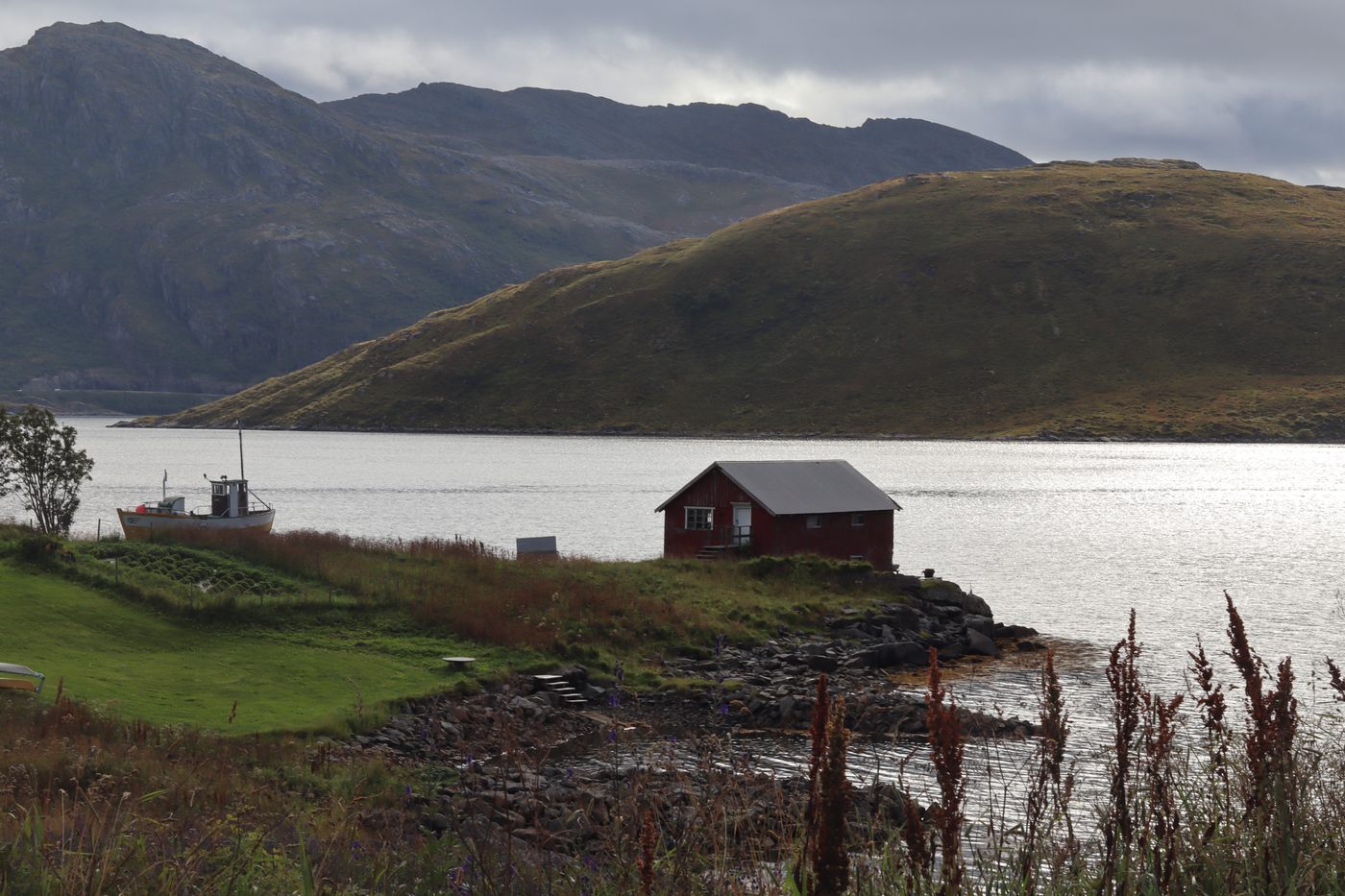
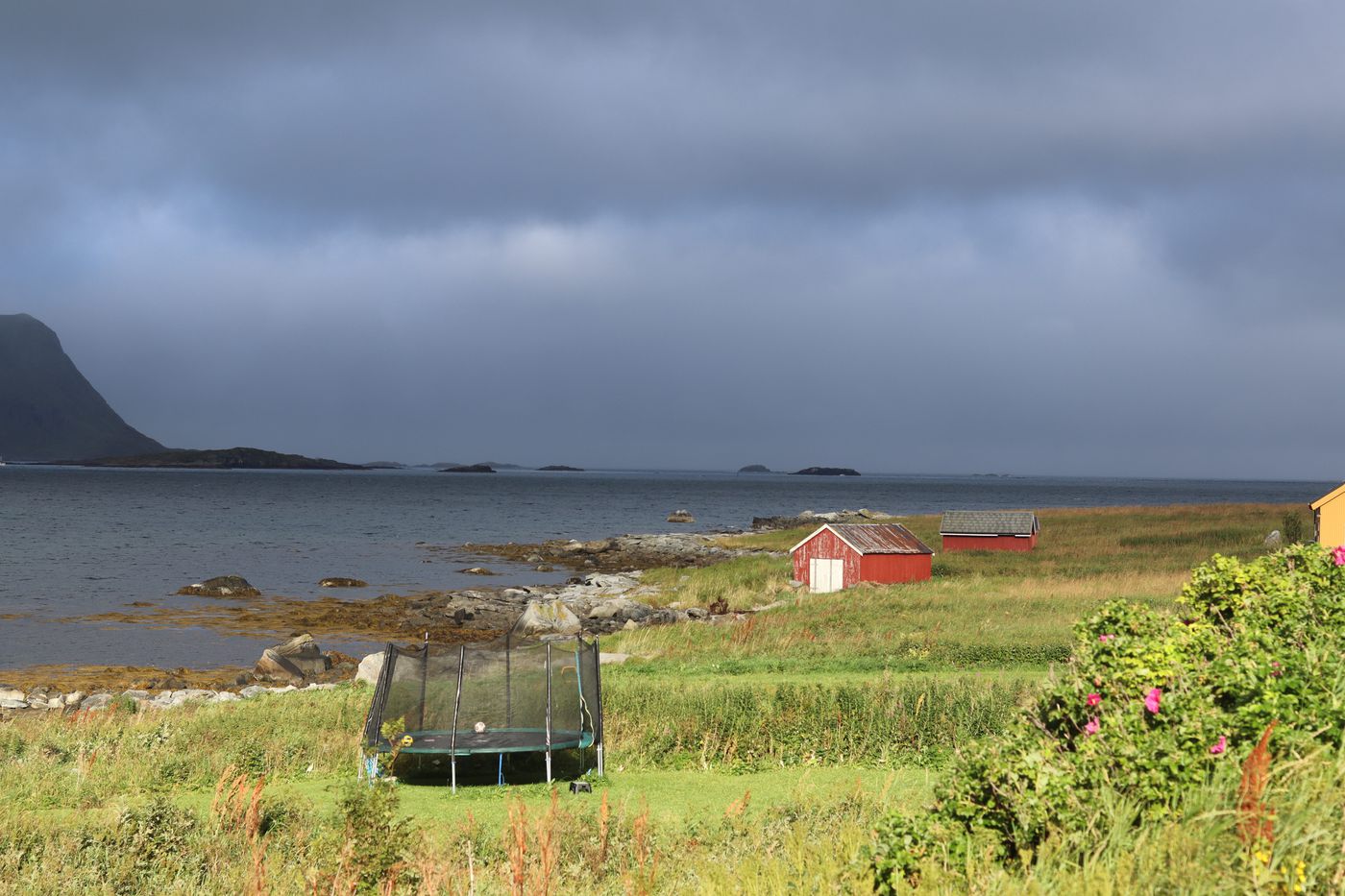
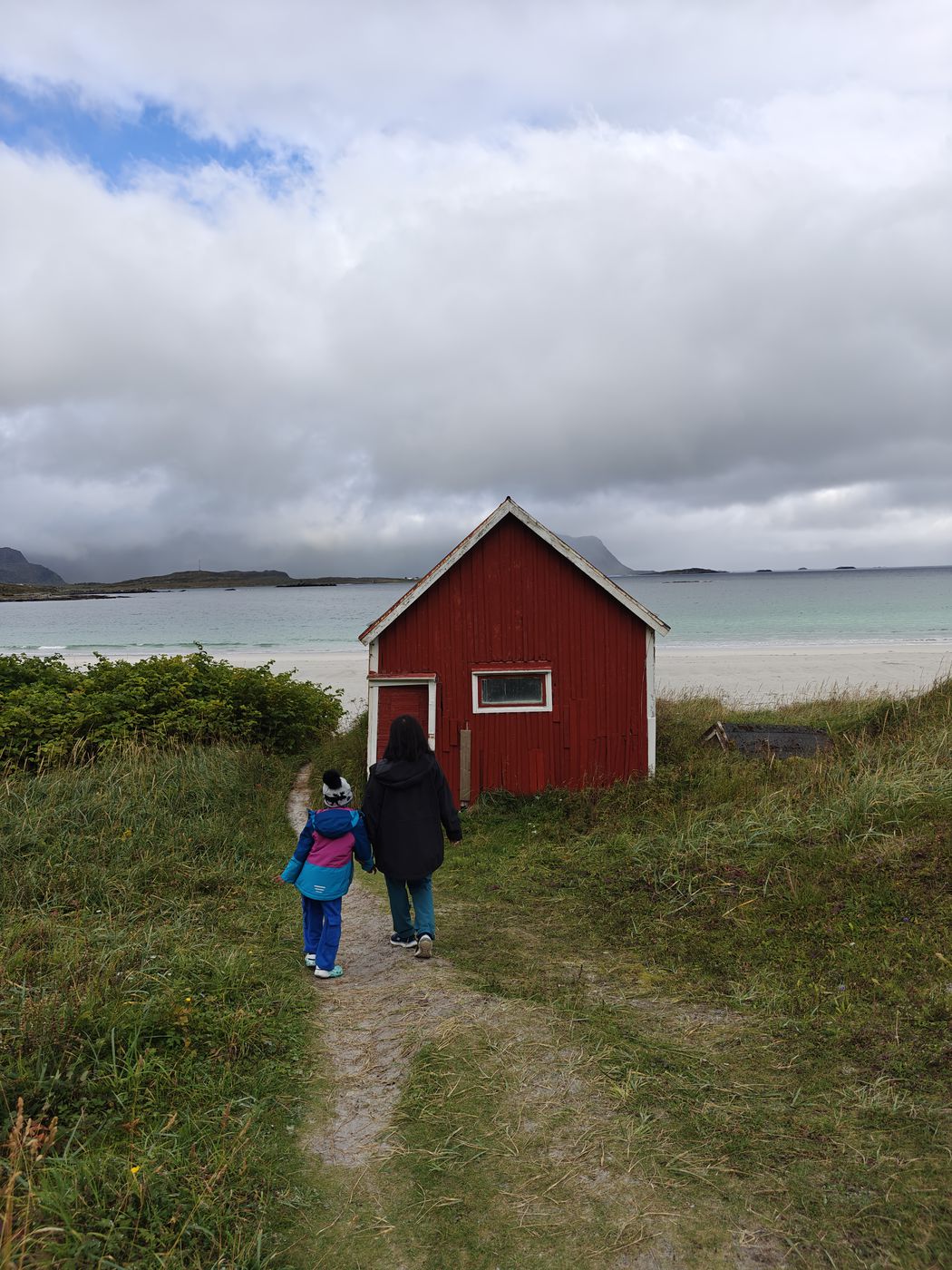
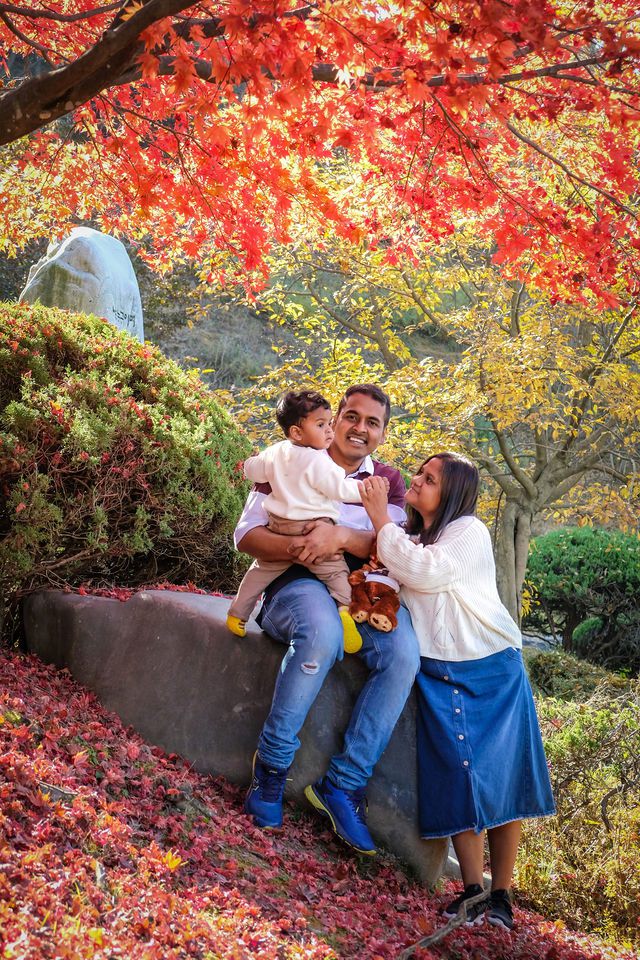
Beyond the screen

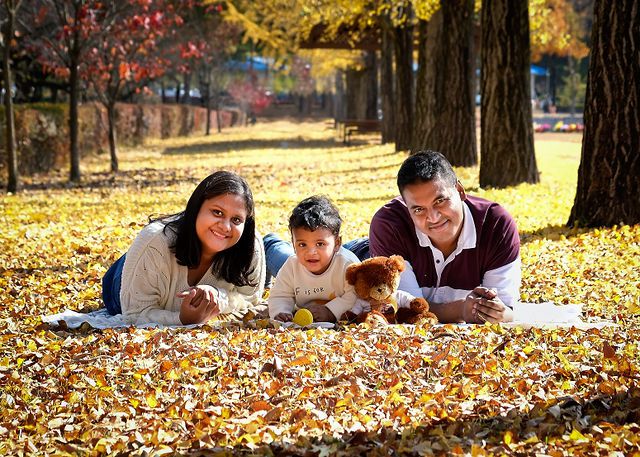
Away from the data, family comes first.

07 · Contact

Let's find the needle together.

Open to Data Scientist and ML roles in Germany. EU Blue Card holder, based in Munich, available at short notice.